Tooth Decay: Causes, Symptoms & Treatment
Tooth decay is one of the most common — and most preventable — dental conditions. Understanding how it starts, how it progresses, and when it requires treatment helps you act before problems deepen.
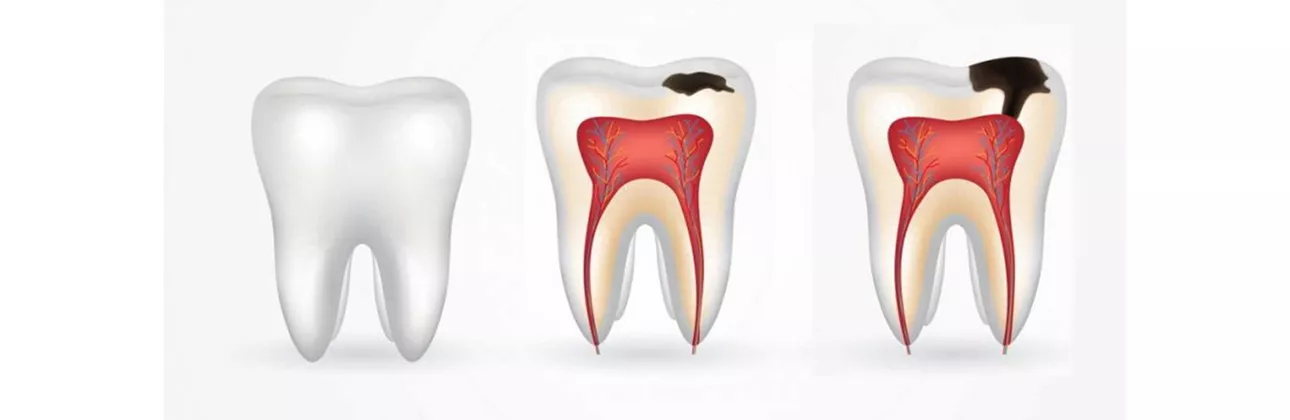
What Is Tooth Decay?
When bacteria in the mouth feed on sugars and produce acid, that acid gradually erodes the outer layer of the tooth — the enamel. Left unaddressed, the damage moves inward through the dentin and, in advanced cases, reaches the pulp where nerves and blood vessels are located. Tooth decay causes and treatment options vary depending on which stage the damage has reached at the time of diagnosis.
Signs and Symptoms of Tooth Decay
Decay does not always announce itself with pain. In many cases, early damage is visible to a dentist before the patient notices any discomfort. Common tooth decay symptoms include:
- A white, chalky spot on the tooth surface — the earliest visible signal of enamel demineralisation
- Visible brown or black discolouration, or a pit you can feel with your tongue
- Sensitivity when eating or drinking something hot, cold, or sweet
- A persistent dull ache or a sharp pain when biting down
- Bad breath or an unusual taste that does not resolve with brushing
If you notice one or more of these tooth decay symptoms, an early dental assessment is the most effective next step.
What Does Tooth Decay Pain Feel Like?
Pain from tooth decay changes character as the damage deepens. Early-stage decay typically produces brief sensitivity — a sharp twinge when drinking something cold or eating something sweet. As the condition progresses into the dentin, the response becomes more prolonged. Deep decay reaching the pulp often causes a throbbing ache that worsens when lying down, or pain that radiates toward the jaw or ear. Discomfort linked to toothache should be assessed promptly rather than managed with pain relief alone.
Pain relief medication may reduce discomfort temporarily, but it does not treat the underlying damage. If symptoms ease after taking pain relief, this does not mean the decay has resolved — it typically continues to progress silently. Follow your dentist's guidance on pain management until your appointment.
What Causes Tooth Decay?
Dental caries is the result of an imbalance between the factors that damage enamel and those that protect it. The main contributing causes of tooth decay include:
- Poor oral hygiene infrequent or incomplete brushing and flossing allows plaque to accumulate and produce acid continuously
- Frequent sugar and acid intake each exposure to sugar triggers an acid attack; frequent snacking or sipping extends the cumulative damage
- Dry mouth saliva neutralises acid and remineralises enamel; reduced saliva flow raises decay risk significantly
- Deep grooves and pits back teeth with complex anatomy are harder to clean and more susceptible to cavity formation
- Inadequate fluoride fluoride supports enamel remineralisation; its absence leaves the tooth surface more vulnerable
Does Sugar Really Cause Cavities?
Yes — but the mechanism matters. It is not simply the quantity of sugar consumed, but the frequency of exposure. Each time sugar reaches the teeth, bacteria produce acid for approximately twenty minutes. Frequent snacking or prolonged sipping of sugary drinks means the teeth are under near-continuous acid attack. Limiting sugar frequency and rinsing with water after sugary foods reduces cumulative enamel exposure.
Stages of Tooth Decay: From Early Spot to Deep Cavity
Tooth decay progresses through distinct stages, and the required treatment changes significantly depending on how far the damage has advanced.
Can a Small Spot Be Treated Without a Filling?
Yes — when tooth decay is identified at Stage 1, before the enamel surface has broken down, professional fluoride application can remineralise the affected area and halt progression. A composite filling is only needed once the surface has been breached. Early diagnosis significantly expands the range of conservative options available.
Can a Filled Tooth Get a New Cavity?
Yes. A tooth that has been restored can still develop decay — typically at the margins where the filling meets the natural tooth surface, if plaque accumulates there over time. Regular checkups allow these areas to be monitored and addressed before the damage extends further.
Treatment Options for Tooth Decay
The appropriate treatment for dental cavities depends on the cavity stages at the time of assessment.
- Fluoride therapy — for early-stage demineralisation, remineralises enamel without requiring restoration
- Composite filling — removes the decayed tissue and restores the tooth with a tooth-coloured material; standard for cavities limited to enamel and dentin
- Inlay or onlay restoration — used when decay or structural damage is more extensive but root canal treatment is not yet needed
- Root canal treatment — required when decay has reached the pulp; the infected tissue is removed, the canal sealed, and the tooth protected with a crown
- Extraction — a last resort when the tooth cannot be structurally saved; followed by a replacement discussion including implants or bridges
Dental cavities treatment Istanbul follows a staged assessment: the least invasive intervention consistent with the clinical picture is recommended first.
When Is Root Canal Treatment Necessary?
Root canal treatment becomes necessary when tooth decay reaches the pulp chamber. Signs that suggest pulp involvement include persistent or spontaneous pain, prolonged sensitivity to temperature, swelling near the tooth, or darkening of the tooth crown. At this stage a filling alone will not resolve the infection, and root canal treatment — followed by a protective restoration — is required to retain the tooth.
When Is Tooth Extraction Required?
Extraction is considered when the tooth is too structurally compromised to support a restoration, when a root canal cannot resolve the infection, or when fracture extends below the gumline. Modern extraction techniques are well-managed and straightforward; replacement options are discussed as part of the same planning process.
Can Some People Be More Prone to Cavities?
Yes. Cavity susceptibility is influenced by both genetic and lifestyle factors. Enamel density, saliva flow rate, saliva composition, and the natural anatomy of the teeth are all partly genetic. People with naturally shallower enamel, reduced saliva production, or deeper molar grooves may experience more frequent dental decay even with consistent oral hygiene.
If you have a family history of frequent cavities, more regular professional monitoring is a reasonable and practical approach. If you have questions about your personal cavity risk, contact our team to arrange an assessment.
How to Prevent Tooth Decay
Tooth decay prevention relies on consistent daily habits combined with regular professional care.
-
Brush twice daily with fluoride toothpasteRemoves plaque before it can mineralise. A soft-bristle brush used gently at the gumline is more effective than vigorous scrubbing.
-
Floss once dailyClears the contact areas between teeth where brushing cannot reach.
-
Limit sugar frequencyReducing how often sugar contacts the teeth matters more than total quantity consumed.
-
Drink water throughout the daySupports saliva flow and dilutes residual sugars and acids between meals.
-
Attend regular checkupsEarly cavity stages are detectable on examination or X-ray before symptoms develop; treatment at this point is simpler and more conservative.
Frequently Asked Questions
-
Does a cavity always cause pain?
No. Early tooth decay — particularly when limited to the enamel — typically causes no pain at all. Pain usually begins when decay reaches the dentin or pulp. This is why routine dental checkups are important: tooth decay causes and progression can be identified before the patient is aware of any problem.
-
Can pain relief medication treat tooth decay?
No. Pain relief manages discomfort temporarily but does not address the underlying infection or structural damage. Follow your dentist's guidance on pain management between diagnosis and treatment. Cavity stages continue to advance regardless of whether pain is present.
-
What happens if a cavity is left untreated?
Untreated decay continues to advance through the tooth layers. What begins as a small cavity may eventually reach the pulp, cause an abscess, and result in tooth loss. Early dental cavities treatment is considerably simpler, less invasive, and more cost-effective than treating advanced tooth decay.
-
How quickly does tooth decay progress?
Progression rate varies depending on diet, oral hygiene, saliva quality, and individual tooth anatomy. In some cases, early-stage demineralisation remains stable for months; in others, a small cavity can progress to pulp involvement within a year. Regular monitoring is the most reliable way to catch changes early.
-
Is tooth decay reversible?
At the earliest stage — enamel demineralisation before a cavity forms — the process can typically be reversed through fluoride therapy and improved hygiene. Once the enamel surface has broken down and a cavity has formed, the lost structure cannot regenerate; restoration is required. Tooth decay prevention is therefore most effective when applied before this threshold is crossed.
-
Can children and adults get tooth decay equally?
Decay affects all ages, though the pattern differs. Children are particularly susceptible in newly erupted teeth with incompletely mineralised enamel. Adults face increased risk from gum recession, dry mouth from medications, and wear on existing restorations. Dental caries treatment Istanbul is tailored to the specific clinical picture of each patient, regardless of age.