Resting After Implant
Rest is the foundation of successful implant healing. This guide explains how long to rest, when to resume daily activities, and what to avoid — with specific guidance for international patients travelling home after surgery.
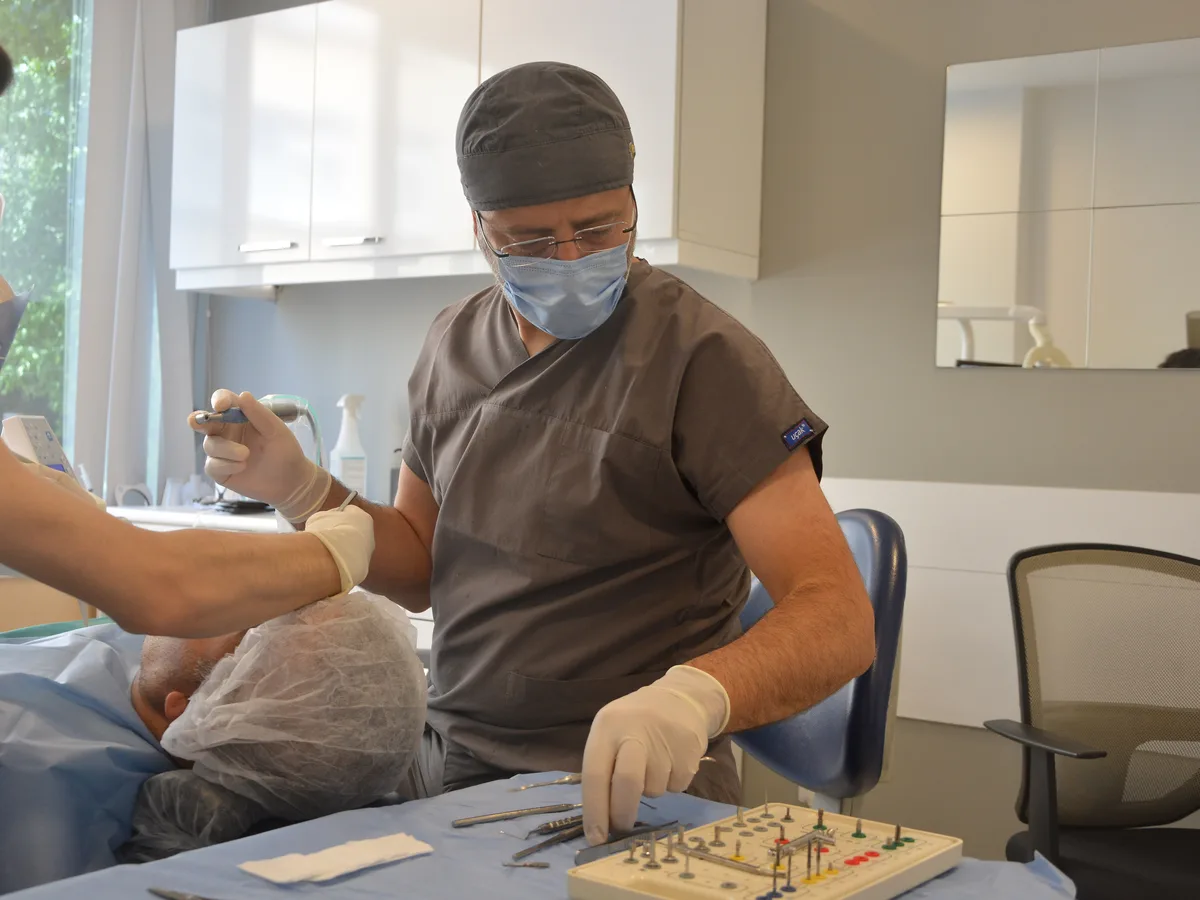
Rest and Recovery After Dental Implant Surgery
The amount of rest you need after a dental implant procedure depends on three main factors: your general health, the number of implants placed, and the complexity of the surgery.
For a straightforward single-implant placement under local anaesthetic, most patients feel well enough to return to light activity the same day. The first few hours after surgery are the most important — rest, avoid hot drinks and hard foods, and let initial clot formation begin undisturbed.
More extensive procedures change the picture considerably. When multiple implants are placed, or when bone grafting or a sinus lift is part of the treatment plan, the tissue trauma is greater and the recovery window is longer. In these cases, several days of reduced activity are typically advised — not because rest is optional, but because physical exertion raises blood pressure and heart rate, both of which can increase bleeding and disrupt the early stages of osseointegration.
Mild swelling and discomfort in the first two to three days are a normal part of the healing response. If you experience any symptoms that concern you, contact your treating dentist rather than self-managing. For a full guide on swelling and recovery after implant surgery, see our dedicated page.
How Long Should You Rest After Implant Surgery?
A practical guide by procedure complexity:
| Procedure Type | Typical Rest Period |
|---|---|
| Single implant, local anaesthetic | Same day to 1 day |
| Multiple implants (2–4) | 2–3 days |
| Full-arch implants / All-on-4 | 3–5 days |
| Bone graft or sinus lift included | 3–7 days |
| General anaesthesia used | Minimum 24 hours post-anaesthesia |
These are general guidance ranges. Your implant dentist's specific instructions always take priority over any general timeline.
When Can You Return to Work?
Returning to work is one of the most practical questions after implant surgery, and the answer depends heavily on what your job involves.
For desk-based or office work, most patients with a simple procedure return the following day without difficulty. If your role involves physical effort — lifting, prolonged standing, or outdoor work in heat — a longer rest period is warranted. Premature physical exertion is one of the most common reasons patients experience extended post-operative bleeding or swelling.
For complex cases involving bone grafting, sedation, or full-arch treatment, most dentists recommend at least two to five days away from work. International patients who have travelled to Istanbul specifically for implant treatment should factor travel time into their planning — flying home immediately after complex surgery is not ideal.
Driving After Dental Implant Surgery
Whether you can drive after your procedure depends entirely on the type of anaesthetic used.
If your implants were placed under local anaesthetic only, you may be able to drive once the effects have worn off and you feel fully alert — typically a few hours after the procedure. Do not drive if you feel drowsy, light-headed, or in significant discomfort.
If sedation or general anaesthesia was used, you must not drive for a minimum of 24 hours. Sedative agents impair reaction time and judgement even when you feel subjectively alert. Arrange a companion or transport in advance for any procedure involving sedation.
Sleep Position and Head Elevation After Surgery
The way you sleep in the first few days after implant surgery has a direct effect on swelling and comfort.
Keep your head elevated — ideally at 30–45 degrees — for at least the first two to three nights. An extra pillow is usually sufficient. Elevation reduces fluid pooling around the surgical site, which directly limits how much swelling develops.
If you sleep on your side, avoid lying on the side of the implant site. Back sleeping with slight elevation is the most comfortable and least disruptive position during early recovery. Avoid sleeping face-down entirely in the first week.
- Elevate head 30–45° for the first 2–3 nights
- Avoid sleeping on the implant side
- Back sleeping with a supportive pillow is ideal
- No face-down sleeping for the first week
Physical Activity: What You Can and Cannot Do
Light tasks — making tea, tidying, gentle cooking — are generally fine from day two onwards for simple procedures. Avoid vigorous physical effort in the first 48 hours: heavy lifting, repeated bending, and sustained exertion all increase blood pressure and can trigger secondary bleeding.
Gentle walking is acceptable after the first day. Gym sessions, running, cycling, and any sport involving impact or contact should be avoided for a minimum of one week after a simple procedure, and longer after complex treatment. Physical exertion raises blood pressure and interferes with early clot stability.
Pool swimming should be avoided for at least one week to prevent bacterial contamination of the wound site. Open water swimming involves additional risks and should wait until full soft-tissue closure is confirmed by your dentist.
If you smoke, be aware that smoking during implant recovery significantly extends healing time and increases complication risk. Your dentist can advise on the appropriate recovery window for your specific situation.
Eating and Oral Care During Implant Recovery
- Soft, cool foods and room-temperature drinks only
- Nothing hot, hard, crunchy, or chewy
- No straws — suction pressure can dislodge the clot
- No alcohol — it interferes with normal healing
- Gradually reintroduce soft foods as comfort allows
- Avoid chewing on the implant side
- Scrambled eggs, yoghurt, soup, soft fish, mashed vegetables
- Continue to avoid alcohol and very hot foods
- Brush gently, keeping away from the surgical site for 48 hours
- After 48 hours: gentle saline rinses
- Use a soft-bristle toothbrush only
- No electric toothbrush directly at the site in the first week
Oral self-care practices during implant recovery are directly linked to peri-implant health outcomes. A 2025 systematic review published in Frontiers in Oral Health (Eagle et al.) confirmed that consistent maintenance is among the most important factors in long-term implant success.
If you are wearing temporary teeth during recovery, your dentist will provide specific hygiene guidance for the prosthesis. Temporary tooth problems during recovery can arise — contact your dentist if you notice any changes in fit or comfort.
Flying Home After Implant Surgery
Many patients travel to our dental clinic in Istanbul specifically to receive implant treatment, and flight planning is a practical part of recovery. Rest and recovery after dental implant treatment in Istanbul should be factored into your travel itinerary before you book return flights.
Flying the following day is generally manageable — though 48 hours in Istanbul is more comfortable.
Allow a minimum of 3–5 days in Istanbul before flying. Air pressure changes can increase discomfort, and you should remain accessible to your treating dentist.
We typically recommend 5–7 days before flying. Your follow-up appointment before departure is essential.
Planning rest time in Istanbul is something we discuss with all international patients during consultation. Our international patients guide covers accommodation, transport, and post-treatment planning in detail. For patients who have had recovery after implants following cancer treatment, additional rest is required — discuss your timeline with your dentist before booking travel.
Before departure, ensure you have written post-operative instructions, any prescribed items dispensed, and emergency contact information. Your Citydent implant process includes a structured discharge protocol covering exactly this.
When to Contact Your Dentist
Most post-operative symptoms are normal and resolve within a few days. Some symptoms require prompt attention.
- Mild swelling peaking at 48–72 hours
- Mild discomfort for 2–4 days
- Minor bruising around jaw or cheek
- Slight bleeding for the first few hours
- Bleeding does not slow after 30 minutes of firm gauze pressure
- Swelling increases significantly after day 3 rather than decreasing
- Fever above 38°C (100.4°F)
- Persistent numbness or altered sensation beyond 48 hours
- Implant site feels mobile or has changed since surgery
- Pus or unusual discharge from the wound site
For pain management after implant surgery that is not resolving as expected, consult your dentist. The tooth implants Istanbul team at Citydent can be reached via the contact options on this site for any post-operative concerns.
Frequently Asked Questions
How long does recovery from dental implant surgery take?
Full osseointegration — the process by which the implant fuses with the jawbone — takes three to six months depending on bone density, implant type, and individual health factors. Day-to-day recovery, meaning return to normal eating, work, and light activity, typically takes three to seven days for most patients.
Can I return to work the day after implant surgery?
For desk-based work after a simple single-implant procedure, yes — most patients manage this comfortably. For physically demanding jobs, or after complex multi-implant surgery, plan for two to five days. Your dentist's specific instructions override any general guidance.
When can I drive after my implant procedure?
If only local anaesthetic was used, driving is typically possible once you feel fully alert — usually a few hours after surgery. If sedation or general anaesthesia was used, you must not drive for at least 24 hours.
Is it normal to have swelling and discomfort for several days?
Yes. Swelling typically peaks at 48–72 hours and then gradually reduces. Mild discomfort during this period is expected. If swelling worsens after day 3, or if you develop a fever, contact your dentist.
Can I exercise after dental implant surgery?
Gentle walking is fine after the first day. Avoid the gym, running, swimming, and any contact sports for at least one week after simple procedures, and longer following complex treatment. Elevated heart rate and blood pressure during the early healing period increase bleeding risk.
When can I eat normally after an implant?
Soft foods from day two, normal eating from around day seven for simple procedures — guided by comfort. Avoid chewing on the implant side until your dentist confirms healing is on track.
Is flying safe after implant surgery?
After a simple single-implant procedure, flying the next day is generally manageable, though 48 hours is preferable. After complex surgery or bone grafting, we recommend staying in Istanbul for at least three to five days before flying home.