Root Canal Treatment in Istanbul
Root canal treatment removes the infection inside your tooth, relieves pain, and preserves your natural tooth — without extraction. At Citydent, each case follows a structured endodontic protocol from imaging to final restoration.
Root canal treatment Istanbul · Citydent Dental Clinic
What Is Root Canal Treatment?
Root canal treatment removes infected or damaged pulp tissue from inside a tooth, eliminates the source of pain, and allows the natural tooth to remain in place. For patients who want to avoid extraction and preserve their own teeth, root canal treatment Istanbul is typically the first option considered when the nerve is affected.
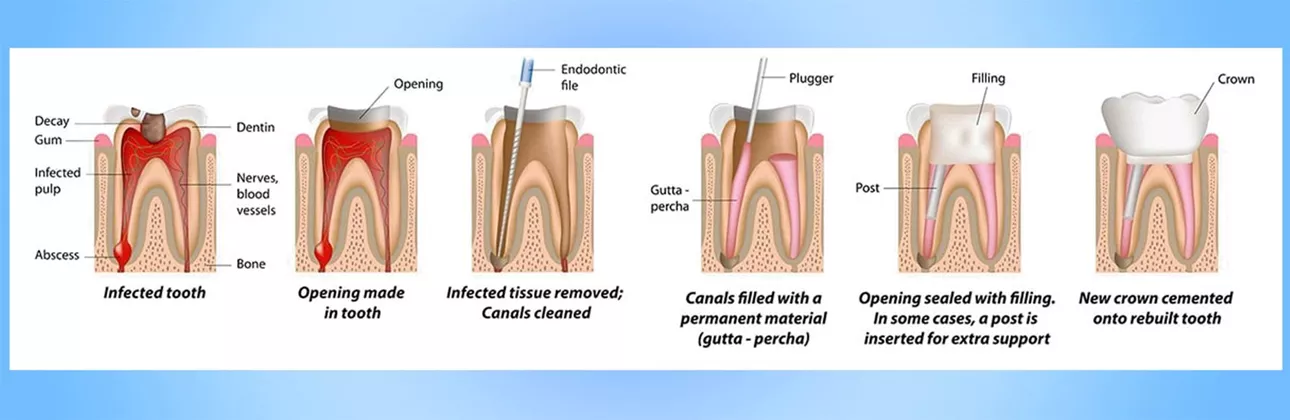
Every tooth contains a soft tissue core — the pulp — that runs through canals in the root. When decay, trauma, or repeated dental procedures cause this tissue to become infected or inflamed, the pulp must be removed, the canals cleaned and shaped, and the tooth sealed to prevent reinfection.
At Citydent, root canal treatment Istanbul is performed using structured endodontic protocols under digital imaging guidance. Each case is evaluated individually before treatment begins. Once the canals are sealed and a suitable restoration is placed — usually a crown — the tooth can continue to function normally. Root canal treatment Istanbul is one of the most frequently requested endodontic procedures at our clinic, particularly among patients travelling from abroad who want reliable, time-efficient care.
When Is Root Canal Treatment Necessary?
Root canal treatment is considered when clinical examination and imaging reveal damage to the pulp that cannot be addressed by filling alone. If you have been experiencing any of the signs below, a clinical assessment will confirm whether endodontic treatment Istanbul is the appropriate route.
- Persistent or severe toothache, particularly when biting or applying pressure
- Prolonged sensitivity to heat or cold that does not resolve
- Darkening of a tooth over time
- Swelling or tenderness in the surrounding gum tissue
- A tooth that has suffered deep decay or significant trauma
In many cases the tooth shows no visible symptoms, and the need for root canal treatment is identified during routine examination or on X-ray.
What to Expect During Root Canal Treatment
-
Diagnosis and imaging Digital X-rays — and where indicated, CBCT imaging — assess root anatomy, measure the extent of infection, and allow precise planning before the procedure begins.
-
Isolation and access The tooth is isolated using a controlled method that prevents bacterial contamination. An access opening is made through the crown to reach the pulp chamber.
-
Canal cleaning and shaping Infected pulp tissue is removed and the canals are shaped with precision instruments. Thorough irrigation and disinfection of the canal space follows.
-
Canal sealing Once the canals are clean and dry, they are filled with a biocompatible sealing material to prevent bacterial re-entry.
-
Restoration A temporary or permanent restoration closes the access opening. Your dentist will advise whether a crown is required to protect the treated tooth long-term — particularly important for posterior teeth that bear chewing load.
Most root canal treatments are completed in one to two appointments, depending on the condition of the tooth and the complexity of the root anatomy.
Root Canal Treatment Istanbul at Citydent
Patients seeking root canal treatment Istanbul at Citydent receive a written treatment plan before any procedure begins. Imaging is reviewed with the patient, and the rationale for treatment — including the expected stages and timeline — is explained in advance.
For international patients, the schedule for root canal treatment Istanbul is coordinated to fit within the available visit window where clinically feasible. Our team will advise on what is realistic for your case during the initial consultation.
If a tooth cannot be saved with root canal treatment, replacement options — including tooth implants Istanbul — can be discussed at the same appointment. Patients are also welcome to book dental treatment Istanbul for a broader assessment of their dental needs.
Risks and What to Watch For

Root canal treatment has a high success rate in appropriately selected cases. However, as with all dental procedures, patients should be aware of some possible outcomes.
Mild discomfort or sensitivity in the treated area for a few days following the procedure is common and typically resolves as healing progresses. Pain relief during recovery should be managed as advised by your dentist.
In some cases — particularly in teeth with complex root anatomy or persistent infection — further treatment or retreatment may be needed. Tooth fracture risk increases after root canal treatment, which is why a well-fitted restoration is an important part of the outcome. If swelling, severe or worsening pain, or other unexpected symptoms develop, contact your dental team promptly.
For guidance on what to expect once treatment is complete, see our after root canal care Istanbul guide. If you have concerns about specific symptoms, our root canal issues page covers the most common post-treatment questions. Patients experiencing a toothache needing root canal Istanbul can contact us to arrange an urgent assessment.
Frequently Asked Questions
What are the advantages of root canal treatment?
Root canal treatment allows you to keep your natural tooth rather than having it extracted. It eliminates the infection causing pain or sensitivity and, once properly restored, the tooth can function normally for many years. In cases where the tooth is still viable, endodontic treatment is generally preferable to extraction and replacement with an implant or bridge.
Does root canal treatment hurt?
The procedure is performed under local anaesthesia and should not be painful during treatment. Some sensitivity or mild discomfort in the area is normal for a few days afterwards. Your dentist will advise on appropriate measures to manage any post-treatment discomfort — follow their guidance on pain relief during recovery.
How many appointments are needed?
Most root canal treatments are completed in one or two appointments. The number depends on the severity of the infection, the complexity of the root canal anatomy, and whether any additional steps are clinically indicated. Your dentist will outline the expected timeline at your initial assessment.
Why do root canal treatment costs vary?
Cost varies based on the number of canals in the tooth, the complexity of the case, and whether additional restorative work — such as a crown — is needed. Retreatment of a previously treated tooth typically involves more steps than primary treatment. For accurate pricing, a clinical examination and X-ray are needed first.
Is a crown always needed after root canal treatment?
A crown is not always required, but it is usually recommended for back teeth that bear significant chewing load, as the treated tooth can become more brittle over time. Your dentist will advise whether a crown or another type of restoration is most appropriate for your case.
When is the permanent filling placed?
A temporary seal is usually placed at the end of the procedure or between appointments. The permanent restoration — whether a filling or a crown — is typically completed within a few days to a few weeks, once the dentist confirms that healing is progressing as expected.
Can multiple teeth be treated in one session?
It is possible to treat more than one tooth in the same session, though this depends on the complexity of each case and the time required. Your dentist will assess whether this is appropriate and plan accordingly.
What if the canals are blocked or calcified?
Canal blockage — sometimes caused by calcification within the tooth over time, previous restorations, or tooth trauma — can make treatment more challenging. Depending on the degree of blockage, your dentist may attempt specialised instrumentation to navigate the canal. In cases where the blockage cannot be resolved, alternative treatment options will be discussed with you.
What are the risks of root canal treatment?
Root canal treatment is one of the most frequently performed endodontic procedures and carries a well-established safety profile. Possible outcomes include temporary sensitivity, a small risk of reinfection if the seal is compromised, and increased brittleness of the treated tooth. Full details are covered in our root canal pain guide and root canal abscess Istanbul pages.
Can I eat normally after root canal treatment?
It is advisable to avoid biting on the treated tooth until the permanent restoration is in place. Once the tooth is fully restored, normal function can resume. Your dentist will give you specific guidance at each stage of your treatment.